Why the Dutch Shepherd Is Built for Agility
Agility and the Dutch Shepherd: Speed, Intelligence, and Precision
Few breeds are as naturally suited for agility as the Dutch Shepherd. Known for their intelligence, athleticism, and intense work ethic, these dogs thrive in fast-paced environments where both mind and body are put to the test. Agility isn’t just a sport for the Dutch Shepherd—it’s an outlet that perfectly matches their purpose-driven nature.
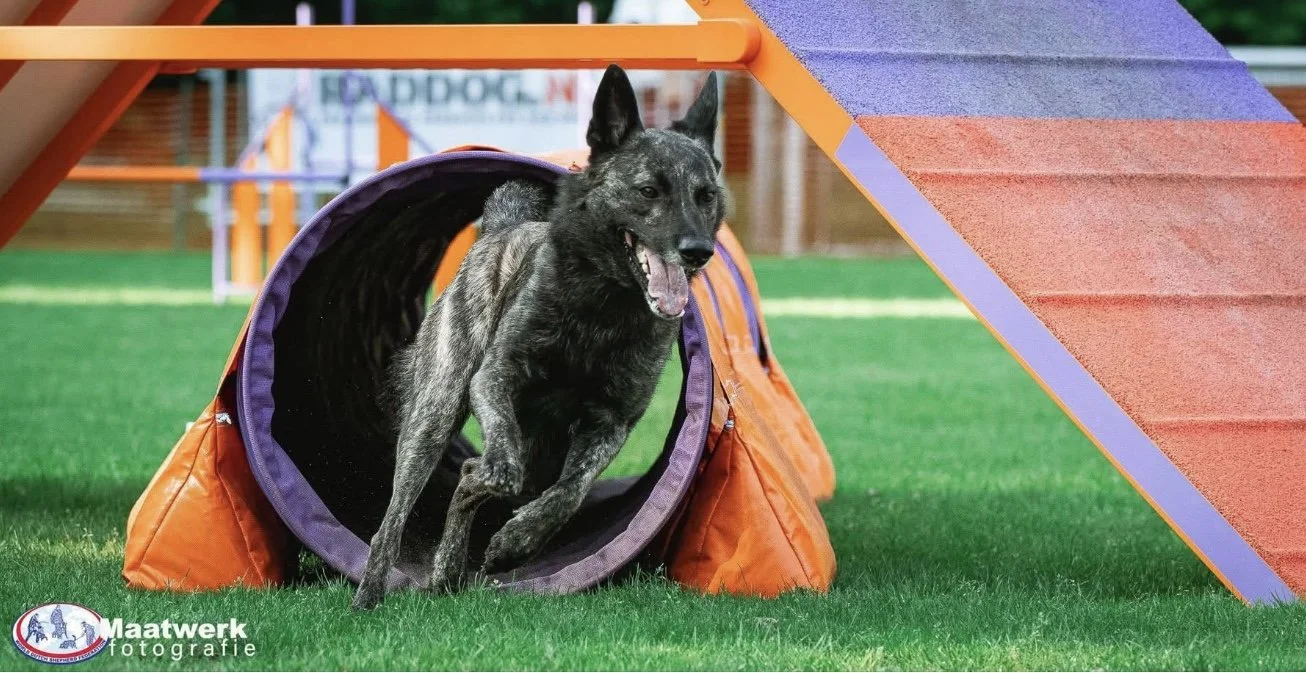
Dutch Shepherd WDSF Agility -Slovenski Club Nizozemskih ovcarjev
Why the Dutch Shepherd Excels in Agility
The Dutch Shepherd was bred to be a versatile farm dog, capable of herding, guarding, and adapting quickly to changing tasks. These traits translate seamlessly into agility.
Key strengths include:
Speed and Efficiency: Their lean, muscular build allows for quick acceleration and tight turns
High Intelligence: They learn complex sequences quickly and respond well to training
Strong Work Drive: They are eager to perform and thrive when given a job
Handler Focus: Their natural attentiveness creates strong communication on the course
This combination makes them highly competitive across all levels of agility.
What Is Agility?
Agility is a timed obstacle course where dogs navigate jumps, tunnels, weave poles, and contact equipment under the direction of their handler. Organizations like the American Kennel Club and the United Kennel Club host agility trials that test both speed and accuracy.
Success in agility depends on more than just athletic ability—it requires teamwork, timing, and trust between dog and handler.
Training the Dutch Shepherd for Agility
Training a Dutch Shepherd for agility should start with a strong foundation:
Obedience First: Solid basic commands ensure control and safety
Positive Reinforcement: This breed responds best to reward-based methods
Mental Engagement: Keep training sessions varied to prevent boredom
Impulse Control: Teaching patience is just as important as building speed
Because of their high drive, Dutch Shepherds benefit from structured training that channels their energy into focused performance.
Challenges to Consider
While highly capable, Dutch Shepherds are not a beginner’s breed. Their intensity and intelligence can be overwhelming without proper guidance.
Common challenges include:
Overexcitement leading to mistakes on course
Sensitivity to handler cues—both good and bad
Need for consistent mental and physical stimulation
With the right training approach, these challenges can become strengths.
The Competitive Edge
In agility competitions, Dutch Shepherds stand out for their versatility and determination. They are equally capable of excelling in local trials and high-level events, often competing alongside other top working breeds.
Their ability to combine speed with precision makes them a formidable presence in the ring.
Dutch Shepherds on the World Stage
At elite international events such as the WDSF World Championship, the qualities of the Dutch Shepherd are on full display. These competitions bring together top working dogs and handlers from around the world, highlighting advanced skill, control, and athleticism.
Dutch Shepherds competing at this level demonstrate not only raw speed, but exceptional handler communication and mental resilience. Their adaptability and drive allow them to perform under pressure, reinforcing their reputation as one of the most capable working breeds in modern dog sports.
Final Thoughts
Agility offers the perfect outlet for the Dutch Shepherd’s energy, intelligence, and drive. For handlers willing to invest time and training, the reward is a powerful partnership built on trust and performance.
Whether you’re competing or simply looking for an engaging activity, agility allows the Dutch Shepherd to do what it does best—work, think, and move with purpose.
Agility Organizations, Clubs, and Elite Trainers
If you’re serious about agility with your Dutch Shepherd, knowing where to train and compete is just as important as the training itself. Several major organizations and training communities shape the sport, offering everything from beginner classes to elite international competition.
Major Agility Organizations
In the U.S. and internationally, agility is governed by several key organizations:
The American Kennel Club is one of the largest agility venues in the U.S., hosting thousands of events each year and even international teams that compete at the world level.
The United Kennel Club offers agility focused on teamwork, accuracy, and accessibility for all breeds.
The United States Dog Agility Association is known for more challenging, technical courses often favored by competitive handlers
The Canine Performance Events provides a more flexible, beginner-friendly environment
The North American Dog Agility Council emphasizes flowing courses and distance handling
Each organization has slightly different rules and course styles, but the core skills remain the same—speed, accuracy, and teamwork.
Local Clubs and Training Communities
Agility training typically starts at the club level, where handlers and dogs build foundational skills. Clubs often host classes, fun matches, and official trials.
For example:
4RK9s Dog Training Club offers agility training from beginner to competition level and participates in AKC, UKC, and NADAC formats.
Most regions have similar clubs, and many are affiliated with one or more agility organizations. These clubs are the backbone of the sport, providing access to equipment, coaching, and trial experience.
What Makes an Elite Agility Trainer?
Top agility trainers—especially those working with high-drive breeds like the Dutch Shepherd—focus on more than just obstacles. They develop:
Handler timing and communication
Dog focus and impulse control
Efficient, safe movement over equipment
Course strategy and handling systems
Elite trainers often compete at national or international levels and may represent teams in events like the FCI Agility World Championship.
Finding the Right Trainer
Not all trainers are the same, and for a breed like the Dutch Shepherd, the right fit matters. Look for:
Experience with working or high-drive breeds
A focus on positive, reward-based training
Proven success in competition environments
Opportunities for trial preparation and ring experience
According to agility communities, many handlers train at local facilities without focusing on a single organization at first—because foundational skills apply across all venues.
Final Thoughts
Agility is a sport built on community. Whether you train through AKC, UKC, or independent clubs, the goal remains the same: building a fast, confident, and connected team.
For the Dutch Shepherd, the right combination of club support, structured training, and competitive opportunitiescan unlock incredible potential—turning natural drive and intelligence into true excellence on the course.