About the Breed
Overview
History
Competition
Coat Types
Temperament
Training & Care
Puppy Buyer Guide
On this Page
Temperament
Core Character & Personality
Drive Levels & Working Instincts
Social Behavior
Challenges & What Can Go Wrong
What an Under-Stimulated Dutch Shepherd Looks Like
Is the Dutch Shepherd Right for You?
Temperament
The Dutch Shepherd Character
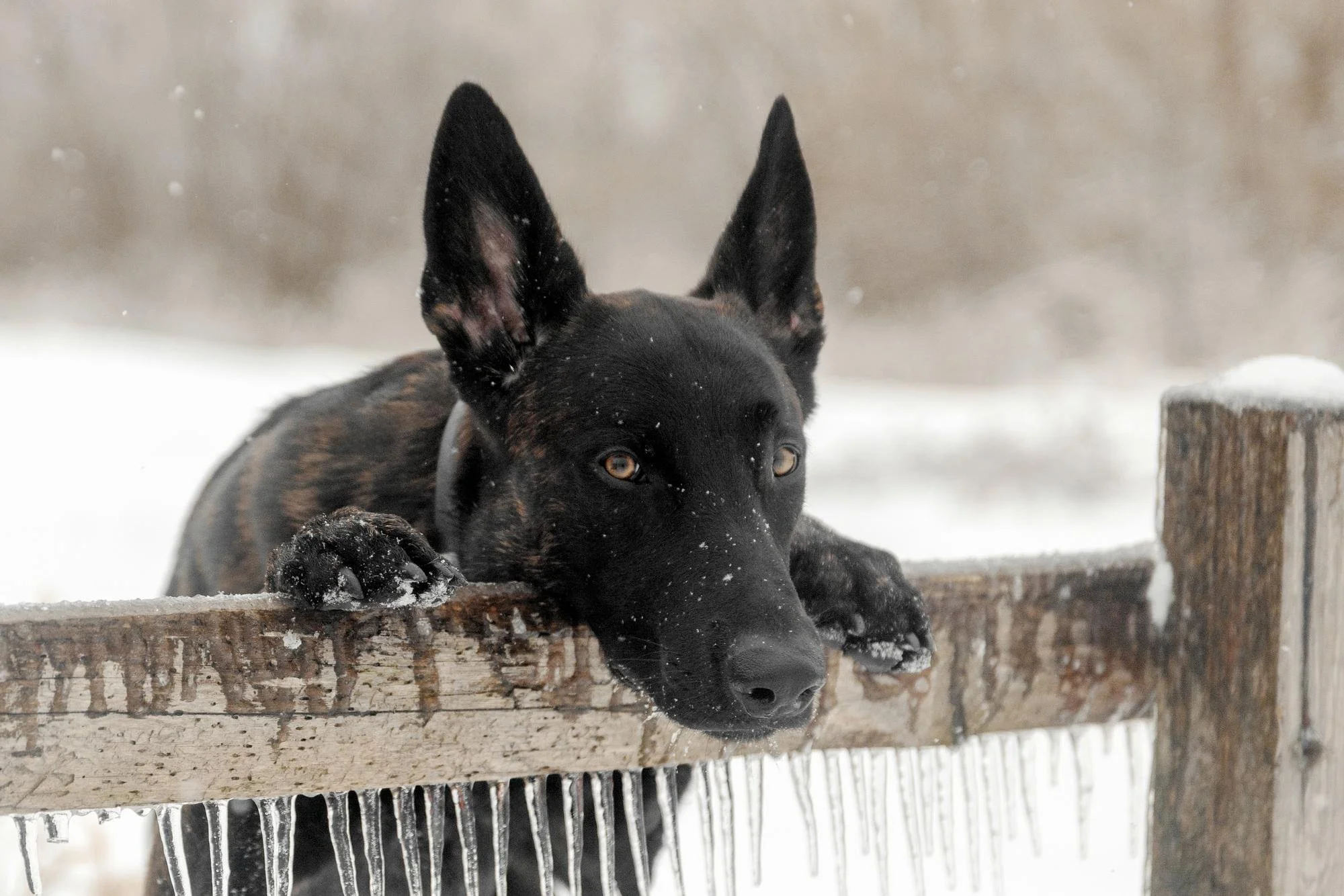
Alert, loyal, and highly intelligent, the Dutch Shepherd is known for its steady and dependable nature. They form strong bonds with their families and often thrive when given a meaningful job or purpose. Their natural protective instincts make them excellent watchdogs without unnecessary aggression.
This is a breed defined not by one quality but by a rare combination of them — drive and stability, independence and loyalty, intensity and affection. The Dutch Shepherd is not a dog that exists at one end of any spectrum. It is a dog that holds contradictions together with unusual grace, provided it is in the right hands and the right environment. Understanding Dutch Shepherd temperament means understanding that these qualities are not separate features that can be picked and chosen. They come as a package. The same intelligence that makes this dog an exceptional working partner is the same intelligence that will find creative outlets if it isn't given productive ones.
Magnific (licensed use)
Core Character & Personality
The Dutch Shepherd is fundamentally a working dog — not in the sense that it must have a formal job, but in the sense that it needs purpose. It is alert by nature, always aware of its environment, and highly attuned to the people it lives with. It notices everything.
At its best, the Dutch Shepherd is confident, stable, and deeply reliable. It is not easily rattled, not prone to anxiety without cause, and not given to unnecessary reactivity. The breed standard describes it as loyal and reliable, always alert and watchful, active and independent — and in a well-bred, well-raised dog, that description holds.
The bond this breed forms with its family is genuine and deep. Dutch Shepherds tend to be handler-oriented — they watch their people, they respond to their people, and they derive real satisfaction from working alongside their people. This is not a breed that is indifferent to its owner. It is the opposite.
Drive Levels & Working Instincts
The Dutch Shepherd carries significant working drive. Prey drive, play drive, defense drive, and food motivation are all typically present to a meaningful degree — which is precisely what makes the breed so effective in sport, service, and working roles. For the right owner, high drive is an asset. For the wrong owner, it is a management challenge that never fully goes away.
Herding instinct remains strong in the breed. Even dogs with no formal herding background will often display natural gathering and controlling behaviors — circling, eyeing, nudging. This instinct is part of what makes the breed so responsive and biddable, but it can also express itself in ways that catch unprepared owners off guard, such as attempting to herd children or other animals.
The Dutch Shepherd's working temperament is characterized by a willingness to engage and a capacity to think independently. These dogs do not simply execute commands — they problem-solve. In a working context that is exactly what you want. In a household without structure, it can lead to a dog that has decided to set its own agenda.
Social Behavior
With Family
Dutch Shepherds are devoted family dogs in the right home. They form close attachments, are affectionate with the people they trust, and are highly attuned to household dynamics. They tend to be loyal to their immediate family group and will naturally monitor and protect that group without being asked to. This protective instinct is steady and measured rather than sharp or indiscriminate — a Dutch Shepherd that is well-bred and well-socialized does not react without cause.
With other Animals
With proper socialization, Dutch Shepherds can coexist well with other dogs and animals. That said, prey drive and herding instinct mean that introductions should be managed carefully, and not every Dutch Shepherd will be a good fit with small animals. Early and ongoing socialization is the single most important factor in how a Dutch Shepherd navigates life with other animals.
With Children
Dutch Shepherds can be excellent with children they have grown up with and that they recognize as part of their family. The important caveat is that the breed's herding instinct and high energy can be overwhelming for very young children, and supervision is always recommended. Children should also be taught how to interact respectfully with the dog. A Dutch Shepherd that is treated as a full member of the family — with boundaries, structure, and engagement — will typically thrive in a household with children.
With Strangers
Reserved is the most accurate word. The Dutch Shepherd is not unfriendly, but it is not indiscriminately social either. It will typically observe and assess before warming to someone new, and that watchfulness is a feature of the breed rather than a flaw. A Dutch Shepherd that barks at everything or, conversely, greets every stranger with unrestrained enthusiasm is not displaying typical breed temperament.
Challenges & What Can Go Wrong
The Dutch Shepherd is not a difficult dog — but it is a demanding one. The distinction matters. With the right owner, structure, and outlet, this breed is one of the most rewarding dogs a person can own. Without those things, problems develop predictably.

Under-stimulation is the most common root cause of behavioral issues in Dutch Shepherds. A dog with significant working drive that has nothing to do will find something to do — and the owner may not approve of what it chooses. Destructive behavior, excessive barking, hyperactivity, and obsessive tendencies are all commonly reported in under-exercised, under-engaged Dutch Shepherds.
Inadequate socialization early in life can produce a dog that is reactive, overly suspicious, or difficult to manage in public. The Dutch Shepherd's natural watchfulness and reserved nature with strangers require a solid socialization foundation to stay within healthy parameters. A dog that misses that foundation can become a dog that is genuinely hard to live with.
Inconsistent handling is another frequent contributor to problems. Dutch Shepherds read their handlers well — which means they also notice inconsistency, uncertainty, and lack of follow-through. They respond best to calm, clear, consistent leadership. Owners who are unpredictable, overly permissive, or heavy-handed will typically see that reflected in the dog's behavior. Over-correction and harsh training methods are counterproductive with this breed. Dutch Shepherds are sensitive to their handler's energy and respond poorly to punishment-based approaches. They do not need to be forced — they need to be engaged, motivated, and clearly guided.
What an Under-Stimulated Dutch Shepherd Looks Like
This is worth addressing directly, because it is one of the most common situations Dutch Shepherd rescue and rehoming organizations encounter.
A Dutch Shepherd that is not getting enough physical exercise, mental stimulation, and meaningful engagement will typically show some or all of the following:
Destructive behavior — chewing, digging, shredding, dismantling anything within reach
Excessive vocalization — barking, whining, or howling, particularly when left alone
Hyperactivity and inability to settle — a dog that cannot switch off, even in the evening
Obsessive or repetitive behaviors — chasing shadows, fixating on lights, compulsive pacing
Redirected frustration — nipping, mouthing, or rough play that escalates beyond what is appropriate
Anxiety and destructiveness when left alone — separation-related behavior that worsens over time
“None of these behaviors indicate a bad dog. They indicate a dog whose needs are not being met. In almost every case, increasing structured exercise, adding training sessions, introducing a sport or working outlet, and establishing a consistent daily routine will produce a measurable improvement. The Dutch Shepherd is a dog that will show you very clearly when something is wrong. That same expressiveness is one of the things owners love most about the breed — once they learn to read it correctly.”
Is the Dutch Shepherd Right for You?
The Dutch Shepherd thrives with an owner who is active, consistent, and genuinely engaged with their dog. It is best suited to someone who wants a partner — a dog that participates fully in their life — rather than a dog that is content to observe from the sidelines. It is not the right breed for everyone, and there is no shame in that. A Dutch Shepherd in the wrong home is not happy, and neither is its owner. But in the right home — with structure, purpose, exercise, and a genuine relationship — this breed will give more than almost any other dog alive.