Coat Types
Three Coats, One Breed
The Dutch Shepherd comes in three coat varieties: short, long, and rough. All three share the breed's hallmark brindle pattern and all are built for the demands of working life — weather-resistant, practical, and double-coated with a woolly undercoat for insulation. The coat variety a dog carries does not affect its temperament, working ability, or breed character in any way. It is purely a matter of appearance and maintenance.
Each coat type is recognized by the FCI, UKC, and AKC standards. In the Netherlands, the short coat is the most common. The long coat is less frequently seen. The rough coat is the rarest of the three and is particularly prized among breed enthusiasts and in the show community. They aren't a dog for everyone — but for the right person or family, they're unmatched.
Short Coat
-
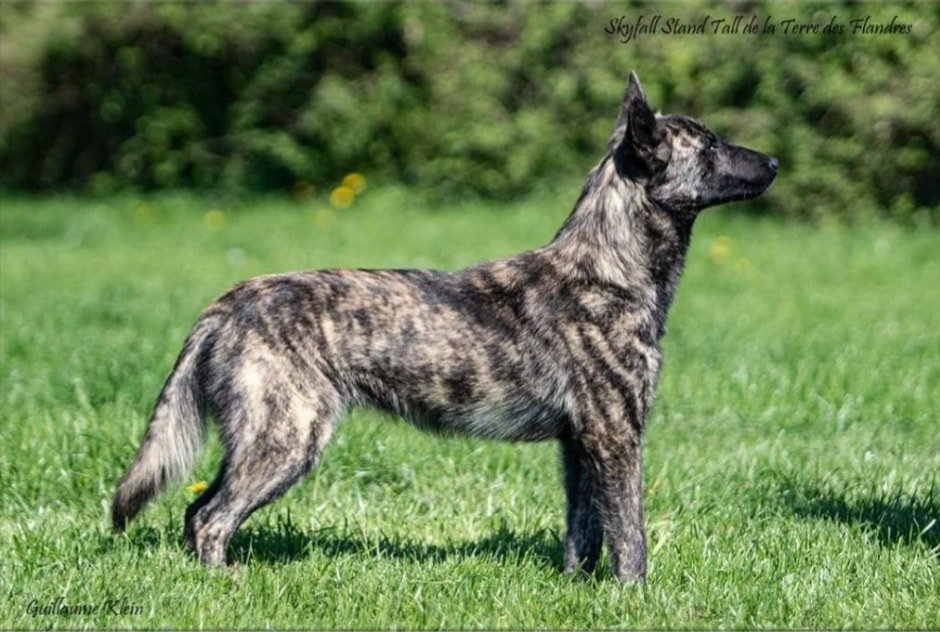
The short coat sits close to the body and is hard and dense to the touch — not soft, not silky. Beneath it sits a woolly undercoat that provides insulation in cold or wet conditions. Despite the name, the coat is not uniform in length across the entire dog. The ruff around the neck, the breeches on the hindquarters, and the tail plume are all noticeably fuller, giving the dog a defined and athletic silhouette.
The short coat showcases the Dutch Shepherd's muscular build more clearly than the other two varieties, giving the dog a sleek, capable appearance that reflects its working heritage.
-
The short coat is the lowest maintenance of the three varieties, but it does shed — particularly during the two main shedding seasons in spring and autumn. Regular brushing during these periods, once or twice a week, will manage loose hair effectively. Outside of shedding season, a weekly brush is generally sufficient to keep the coat clean and healthy. Bathing as needed, routine nail care, and regular ear checks complete the maintenance routine.
-
The short coat is the most common variety found in police, military, and KNPV working roles. Its close-fitting nature makes it practical in demanding conditions — less likely to pick up debris, easier to check for injuries after work, and quick to dry after water exposure. It is the go-to coat for active working and sport dogs.
Long Coat
-
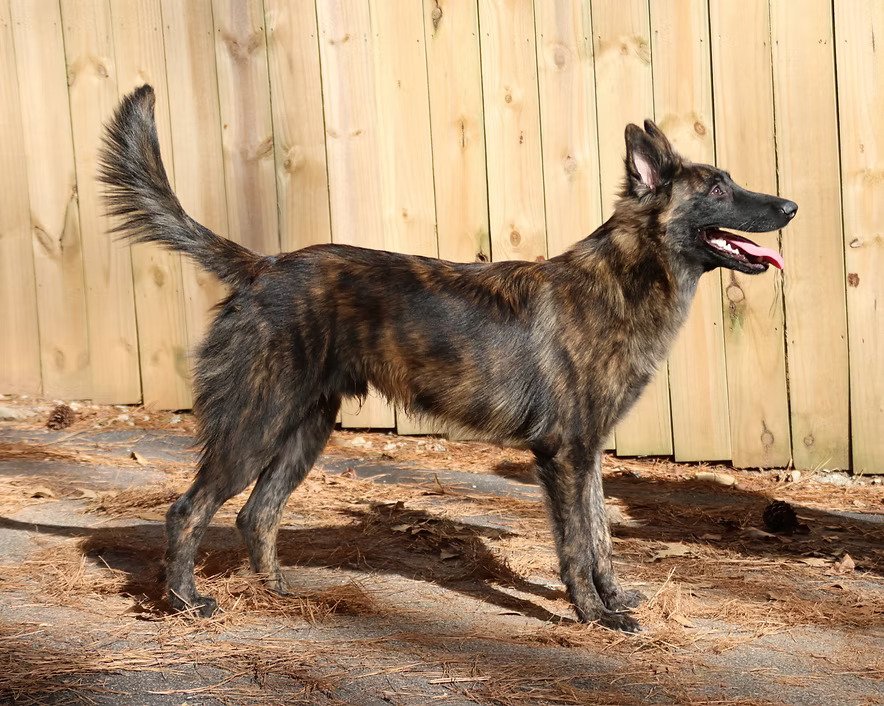
The long coat is straight, flat, and harsh to the touch — never soft, wavy, or curly. A woolly undercoat sits beneath. The coat is longest along the neck, chest, backs of the forelegs, hindquarters, and tail, where it forms a distinct ruff, well-developed breeches, and a fully coated tail plume. The head, ears, feet, and lower legs below the hocks remain short and densely coated. There are no fringes on the ears.
When well-maintained, the long coat gives the Dutch Shepherd an elegant, flowing appearance that makes it a striking presence in the show ring — while remaining entirely functional as a working coat.
-
The long coat requires more consistent attention than the short coat. Regular brushing two to three times per week prevents matting, particularly in the areas of heaviest coat — the ruff, breeches, and tail. During shedding seasons the undercoat blows heavily, and more frequent brushing during these periods is essential. A slicker brush and a metal comb are the primary tools. Mats should be addressed promptly before they tighten against the skin. Bathing every four to six weeks, combined with thorough drying, keeps the coat in good condition.
-
The long coat is fully capable in working and sport contexts, though it requires more post-work maintenance than the short coat — checking for burrs, debris, and tangles after fieldwork is part of the routine. In cold and wet climates the dense undercoat provides excellent insulation. The long coat is less common than the short in formal working roles but is well represented in sport, show, and companion homes.
Rough Coat
-
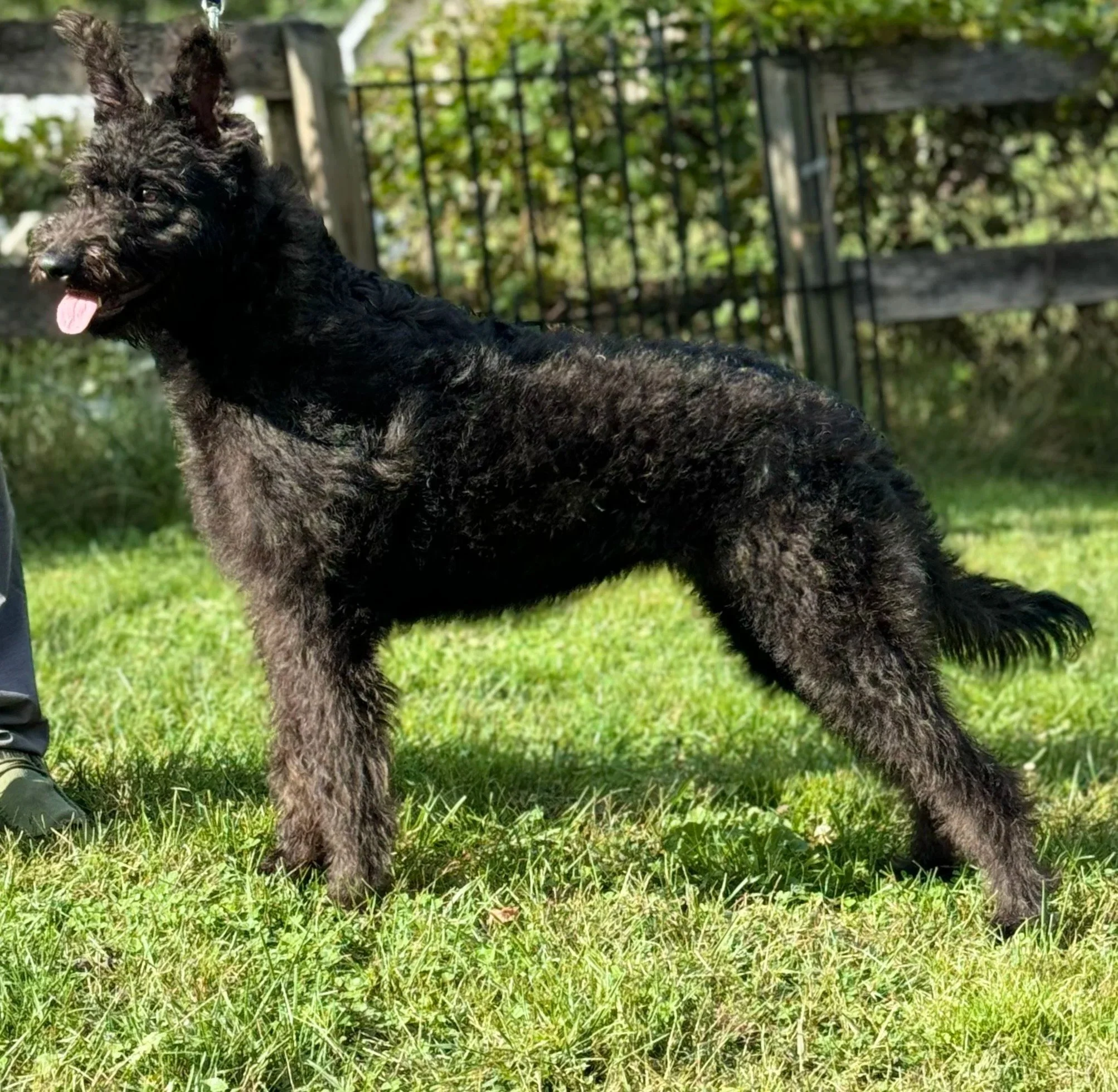
The rough coat — also referred to as wire coat in some standards — is the most visually distinctive of the three varieties. The outer coat is dense, harsh, and tousled across the body, sitting close rather than standing off. The undercoat is woolly and dense. The head carries its own distinctive features: the upper and lower lips are well covered with hair, forming clearly defined whiskers and a beard, along with two coarse, prominent eyebrows that are distinct without being exaggerated. This gives the rough-coated Dutch Shepherd an immediately recognizable, rugged expression unlike the other two varieties.
-
The rough coat requires a specific and different approach to maintenance compared to the short and long coat varieties. To maintain the correct harsh texture, the coat should be hand-stripped rather than clipped. Clipping a rough coat will soften the texture over time, affecting both the appearance and the weather-resistant properties of the coat. Hand-stripping — the process of removing dead outer coat by hand or with a stripping knife — should ideally be performed by a groomer familiar with wire-coated breeds. Between full strips, regular brushing keeps the undercoat clear and the coat tidy. The beard, whiskers, and eyebrows benefit from periodic tidying to maintain the breed's characteristic expression.
-
The rough coat is the rarest variety in both working and show contexts. Its dense, tousled texture provides excellent protection in harsh outdoor conditions, and the breed's working ability is no less in the rough-coated variety than in the others. However, the specialist grooming requirements mean it is more commonly found in dedicated breed enthusiast and show homes than in active working or sport roles. Those who are drawn to the rough coat tend to be deeply invested in the breed — it is a coat that rewards knowledge and commitment.
Coat Type at a Glance
| Short Coat | Long Coat | Rough Coat | ||
|---|---|---|---|---|
|
Hard, close-fitting | Straight, harsh | Dense, tousled | |
|
Woolly | Woolly | Woolly, dense | |
|
Weekly + shedding season | 2–3x per week | Hand-strip + regular brush | |
|
Moderate, seasonal | Heavy, seasonal | Moderate | |
|
Yes | Sometimes | Rarely | |
|
Most common | Less common | Rarest |