“What Is PDC? Understanding the First Step in PSA Competition”
By Jasmine Hall
For teams interested in competing in PSA, the Protection Dog Certification (PDC) is the first step in the journey. PDC is the introductory level of the Protection Sports Association and is designed to evaluate whether a dog and handler have developed the foundation skills necessary to move forward in protection sport.
While protection exercises are an important part of the test, PDC is not simply about a dog’s ability to bite. The certification evaluates the complete team—including obedience, communication, confidence, control, and the dog’s ability to perform in an unfamiliar environment.
A successful PDC team demonstrates that the dog can work with its handler, remain focused under pressure, and respond appropriately in challenging situations.
What Does PDC Stand For?
PDC stands for Protection Dog Certification. It is the entry-level title within PSA and must be successfully completed before a team can continue to the higher PSA levels, including PSA1, PSA2, and PSA3.
The purpose of PDC is to establish that a dog has the necessary foundation to participate safely and successfully in protection sport. It tests the relationship between the dog and handler while introducing the basic concepts required for advanced PSA competition.
The PDC Trial Structure
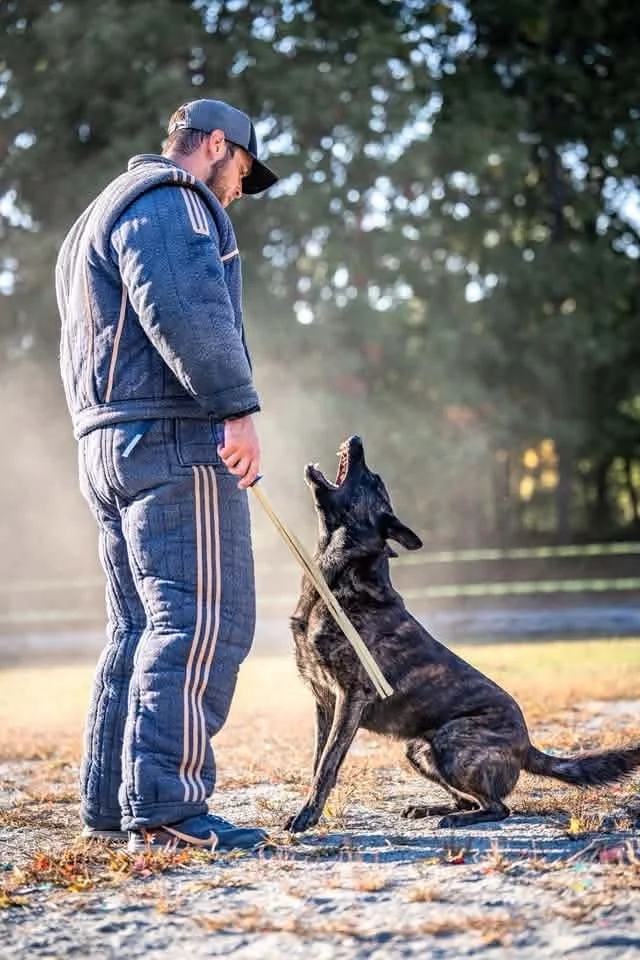
A PDC trial is divided into two main sections:
Obedience
Protection
The dog and handler team must successfully complete the obedience portion before moving on to the protection phase.
Both sections are evaluated by PSA judges, who score the team based on the rules and standards of the sport.
The PDC Obedience Test
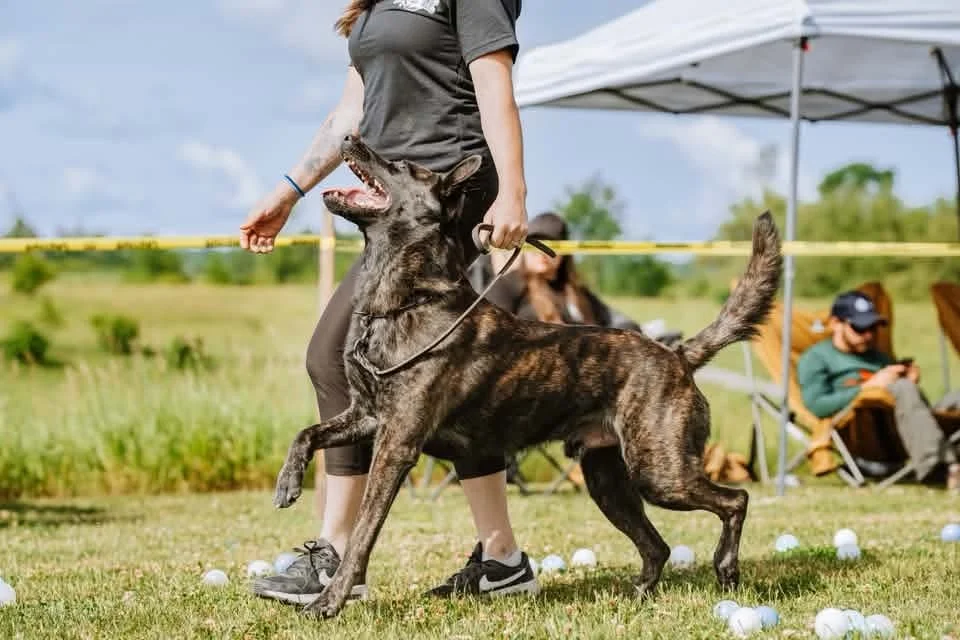
Obedience is the first challenge of the PDC trial. It demonstrates whether the dog can focus on the handler and perform under the pressure of a trial environment.
At the beginning of the obedience test, the team starts with a set number of available points. During the exercise, points may be deducted for mistakes such as lack of focus, handler errors, or incomplete exercises.
The handler and dog must perform a specific obedience pattern, which may include:
Heeling exercises
Changes of direction
Transitions between positions
Maintaining attention on the handler
For PDC, the dog is required to demonstrate a controlled loose-leash heel. The team must achieve the minimum passing score in obedience before continuing to the protection portion of the trial.
The obedience phase shows that the dog understands how to work with the handler and maintain control before entering a higher-energy protection scenario.
The PDC Protection Test
After passing obedience, the team moves on to the protection portion of the trial. The protection phase consists of three scenarios designed to evaluate the dog’s confidence, commitment, and ability to respond to the handler.
Certified PSA decoys perform these scenarios to ensure that each exercise is presented safely, consistently, and fairly.
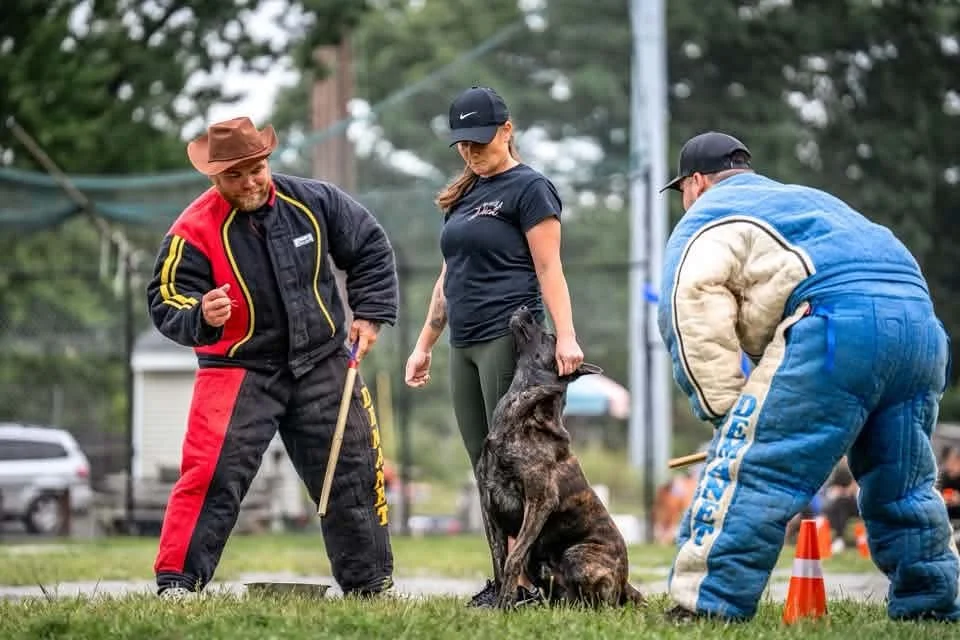
Phase 1: Carjacking
The carjacking scenario evaluates the dog’s ability to recognize and respond to a threat while remaining under control.
During this exercise, the dog is positioned inside a vehicle while a decoy wearing a hidden sleeve approaches and applies pressure through the vehicle window. The dog must demonstrate confidence by vocalizing and engaging with the situation before the sleeve presentation.
Once the bite opportunity is presented, the dog must commit to the engagement and demonstrate the trained behaviors expected in the exercise.
This phase tests:
Confidence
Environmental awareness
Willingness to engage
Handler communication
Phase 2: Attack From the Rear
The attack from the rear scenario tests the dog’s ability to respond when pressure is introduced unexpectedly.
The handler and dog are approached from behind by a decoy wearing protective equipment. The dog must recognize the situation, respond appropriately, and engage the decoy when required.
The handler must then demonstrate control by successfully calling the dog off and returning the dog to a controlled state.
This exercise evaluates:
The dog’s courage
The ability to respond under pressure
The handler’s control over the dog
Phase 3: Courage Test
The courage test is one of the most recognizable exercises in protection sports. It evaluates the dog’s confidence and commitment while facing pressure from a distance.
The dog begins by confronting a decoy positioned away from the team. The dog must demonstrate confidence and remain engaged while the decoy approaches.
When instructed, the handler sends the dog to engage the decoy. The dog must maintain the engagement until the handler is able to retrieve and regain control of the dog.
This phase tests:
Mental stability
Confidence
Commitment
The relationship between dog and handler
What Is PDC-SD?
PSA also offers a PDC-SD division. The structure is similar to the standard PDC, but there is a difference in the equipment used during the protection exercises.
In the PDC-SD division, the decoy wears a sleeve rather than the full protection suit top. This allows teams to earn a PDC certification through a different presentation of the protection exercises.
Both divisions evaluate the same important qualities: a dog’s confidence, control, and ability to work with the handler.
What Does Passing PDC Demonstrate?
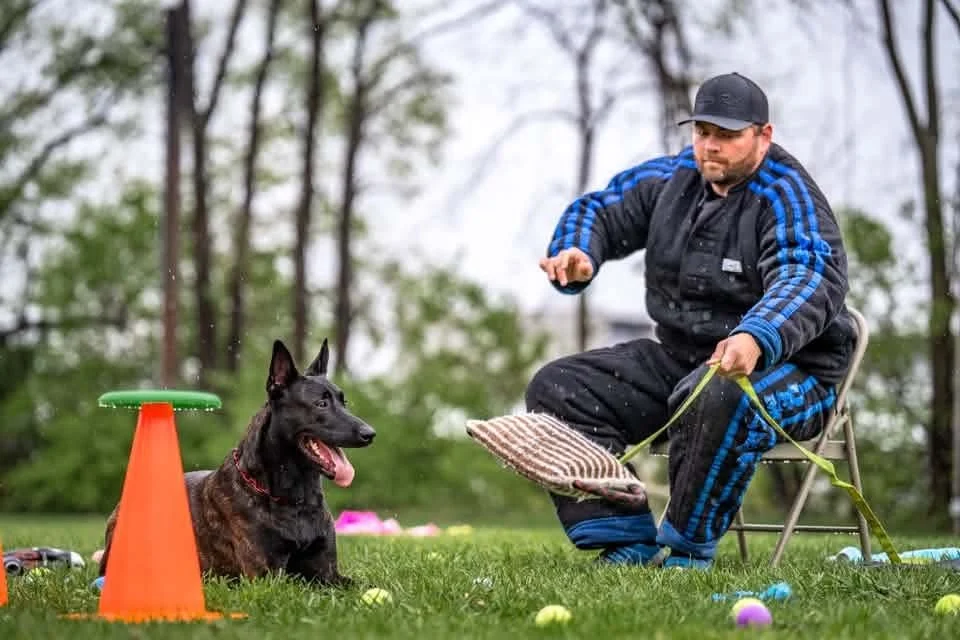
Earning a PDC title shows that a dog and handler team have developed important foundation skills for protection sport.
A successful PDC team demonstrates:
Confidence
The dog can face new situations, pressure, and distractions without losing stability.
Control
The dog can perform high-energy exercises while remaining responsive to the handler.
Environmental Stability
The dog can work in unfamiliar locations, around new people, and in a trial atmosphere.
Handler Communication
The dog and handler understand each other and can work together as a team.
Passing PDC does not happen overnight. Most teams spend significant time building obedience, developing communication, and preparing for the challenges of the trial field.
Preparing for the Next Level
After earning a PDC title, teams can continue developing their skills toward PSA1 and beyond. Each level increases the difficulty and requires a greater level of teamwork, precision, and preparation.
The foundation built during PDC becomes the starting point for future success in PSA competition.
Final Thoughts
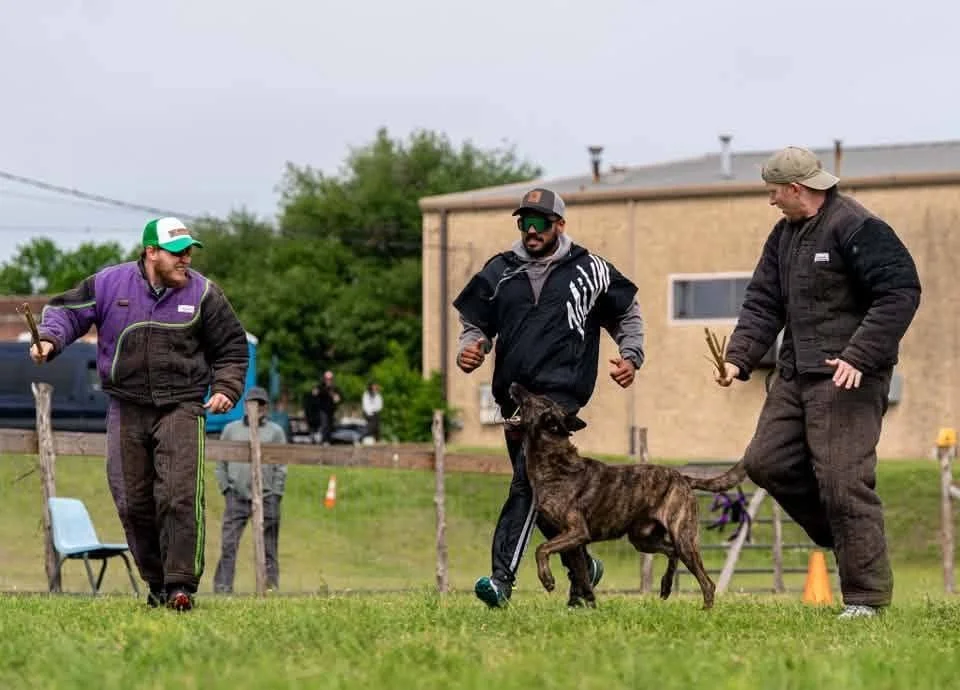
PDC is more than an introductory protection title—it is a test of partnership between a dog and handler. It recognizes teams that have developed the confidence, control, and communication necessary to begin their PSA journey.
For Dutch Shepherd owners and working dog enthusiasts, PDC provides a structured goal that challenges both the dog and handler while strengthening their relationship.
A successful PDC team is not defined only by what the dog can do, but by how well the dog and handler can work together.