By Ashley Jacobson
Picture used with permission
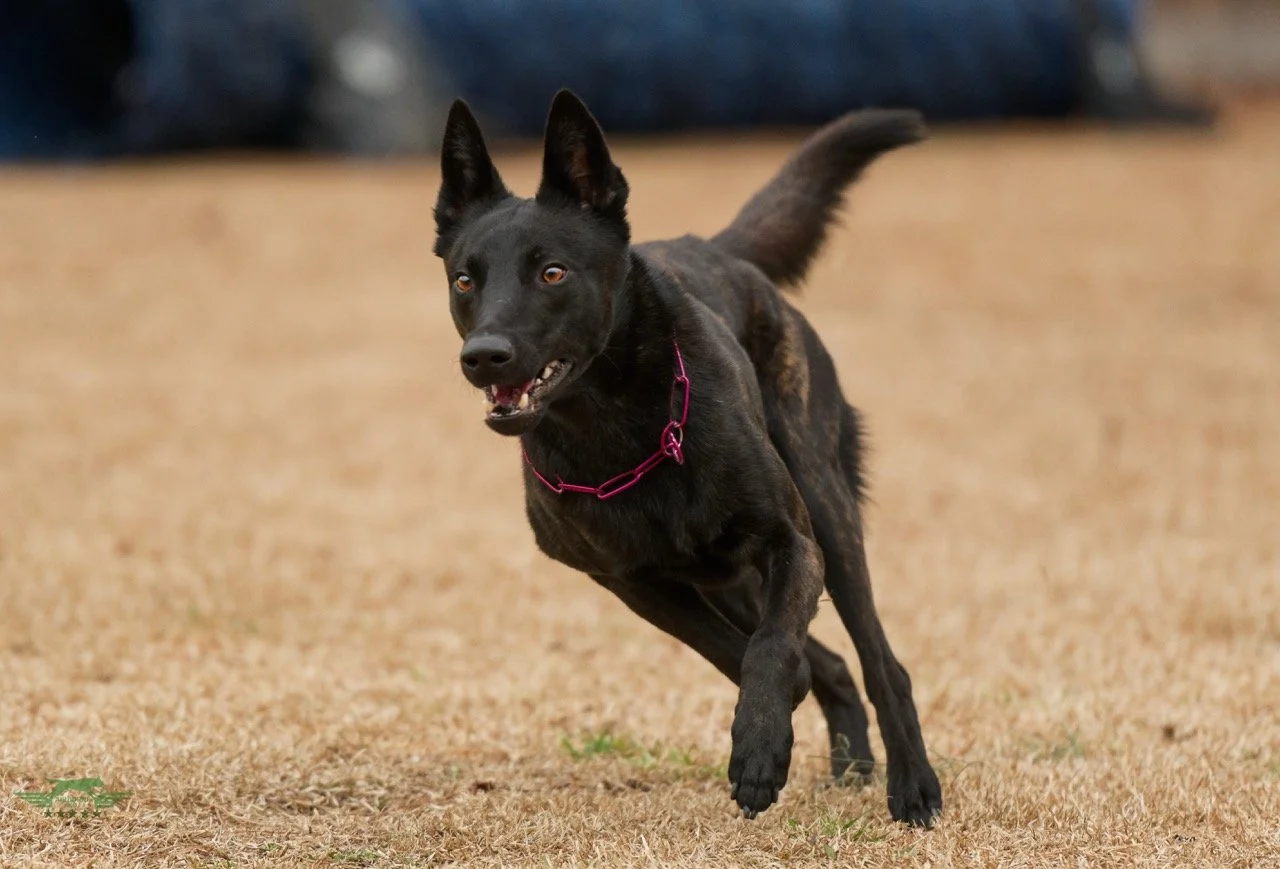
The Dutch Shepherd has become something of a phenomenon in the working dog world. Whether the venue is IGP, American Schutzhund, PSA, Ring Sports, search and rescue, or law enforcement, the breed continues to distinguish itself. Yet the explanations offered for this success are often surprisingly shallow.
"They're just crazy."
"They have endless drive."
"They never quit."
Those soundbites may make for entertaining conversations around the training field, but they do little to explain why Dutch Shepherds consistently perform at such a high level. The real answer is considerably more nuanced—and far more interesting.
Their success is not simply a matter of having "more drive." It is the result of a unique combination of athleticism, environmental confidence, resilience under pressure, trainability, and an exceptional ability to transition between vastly different tasks without sacrificing intensity or precision. As modern working dog sports have evolved, those qualities have become increasingly valuable.
The Evolution of Modern Working Sports
Working dog sports have never stood still. With every generation of competitors, improvements in breeding, training methodology, and handler skill continue to raise the standard of performance. Today's competitors are expected to demonstrate greater precision, higher intensity, faster execution, and longer periods of sustained concentration than ever before.
Several decades ago, podium placements were commonly occupied by breeds such as the German Shepherd, Giant Schnauzer, Rottweiler, and Bouvier des Flandres. These powerful working breeds excelled under the demands of their era, when routines emphasized strength, confidence, and reliable execution.
Watch footage from national championships thirty or forty years ago, however, and the contrast becomes obvious. The routines that once represented the pinnacle of obedience often appear comparatively slow and methodical by today's standards. Modern competitors are expected to perform with explosive execution while maintaining exceptional precision.
As the overall quality of competition has increased, judging has become increasingly refined. When nearly every dog on the field performs an excellent routine, championships are often decided by the smallest details: a fraction of a second in a recall, a slightly crooked heel position, or a momentary lapse in attention.
Precision has become the deciding factor.
This evolution has quietly shifted the competitive landscape. The characteristics that once dominated the sport are no longer the only qualities that determine success. Dogs capable of combining speed, athleticism, environmental stability, trainability, and endurance have become increasingly competitive—and few breeds embody that combination more consistently than the Dutch Shepherd.
Working Sports Popular Among Dutch Shepherds
To understand why the Dutch Shepherd has become so successful, it helps to examine the sports themselves. Although each discipline emphasizes different skills, they all demand exceptional versatility from both dog and handler.
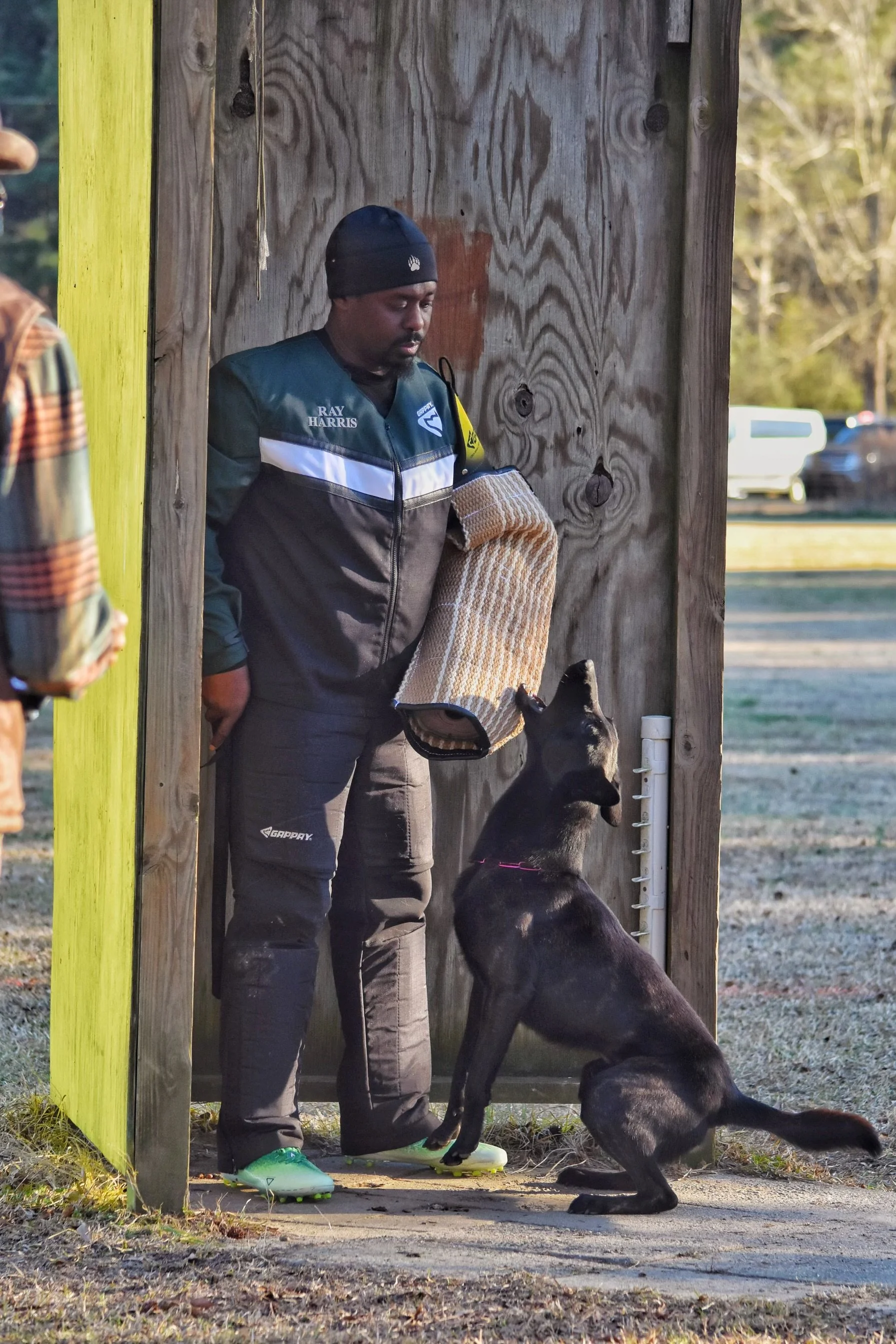
While modern protection sports differ significantly in format, many trace portions of their development to programs originally created to evaluate military and police dogs. Among the most influential is KNPV.
Ray Harris (used with permission)
What is KNPV?
KNPV (Koninklijke Nederlandse Politiehond Vereniging, or Royal Dutch Police Dog Association) is a Dutch police dog training and certification program established in 1907 to develop and evaluate dogs for real operational police work.
Although it is often associated with working dog sports because of its demanding exercises, KNPV is not a competitive sport. Its primary purpose is to evaluate whether dogs possess the temperament, trainability, courage, environmental stability, and working ability required for law enforcement service.
KNPV programs test dogs through practical exercises designed around real-world applications, including obedience, scent work, searching, agility, and protection. The emphasis is not on producing a polished competition performance, but on developing capable and reliable working partners.
For more than a century, KNPV has influenced working dog breeding programs throughout Europe and beyond. Many successful Dutch Shepherd and Belgian Malinois working lines have been shaped by dogs proven through KNPV certification.
The qualities selected through KNPV—athleticism, resilience, confidence, environmental stability, and strong working ability—are the same qualities that have contributed to the success of these breeds in modern working sports.
What is IGP?
IGP (formerly known as Schutzhund) is an international working dog sport developed in Germany to evaluate the qualities required of breeding and service dogs. Today, it is governed internationally through the Fédération Cynologique Internationale (FCI) and is practiced worldwide.
Picture used with permission
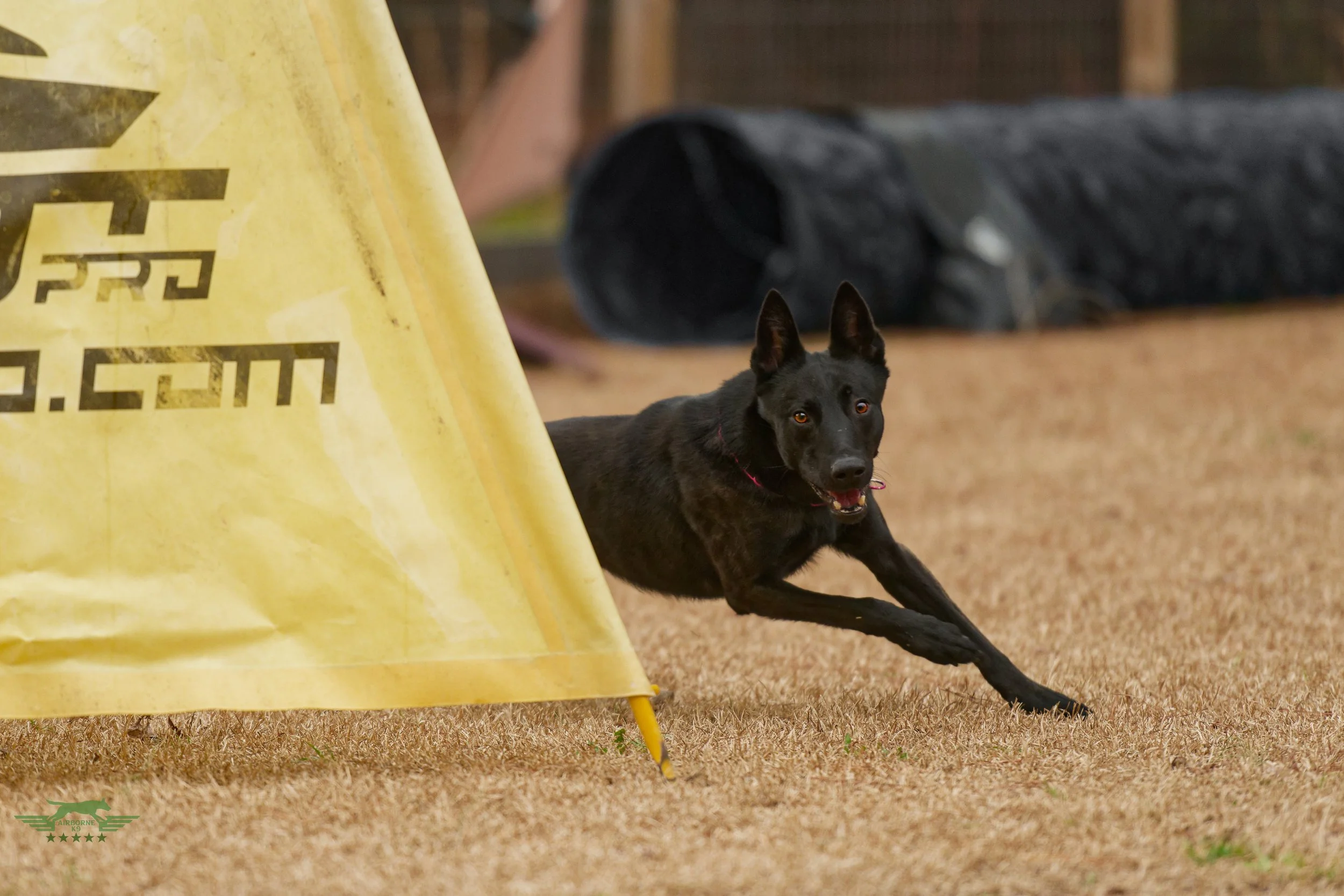
IGP is built around three distinct phases: Tracking, Obedience, and Protection. To earn an IGP title, teams must successfully complete all three phases during the same trial, demonstrating not only proficiency in each discipline but also the ability to transition seamlessly between them.
The tracking phase evaluates methodical scent work, concentration, and persistence over varied terrain. Obedience demands technical precision, speed, and animation while maintaining complete handler engagement. Protection tests courage, control, gripping behavior, and the ability to remain composed while under pressure from a helper armed with a padded stick.
Perhaps more than any other protection sport, IGP rewards balance. A dog cannot rely solely on power or enthusiasm. Success requires calm concentration on the tracking field, precision in obedience, and confident intensity during protection—all within the same competition.
This balance plays directly into the Dutch Shepherd's strengths. Their athleticism, trainability, and ability to shift effortlessly between calm concentration and explosive engagement allow many Dutch Shepherds to perform each phase with equal enthusiasm.
What is American Schutzhund (AS)?
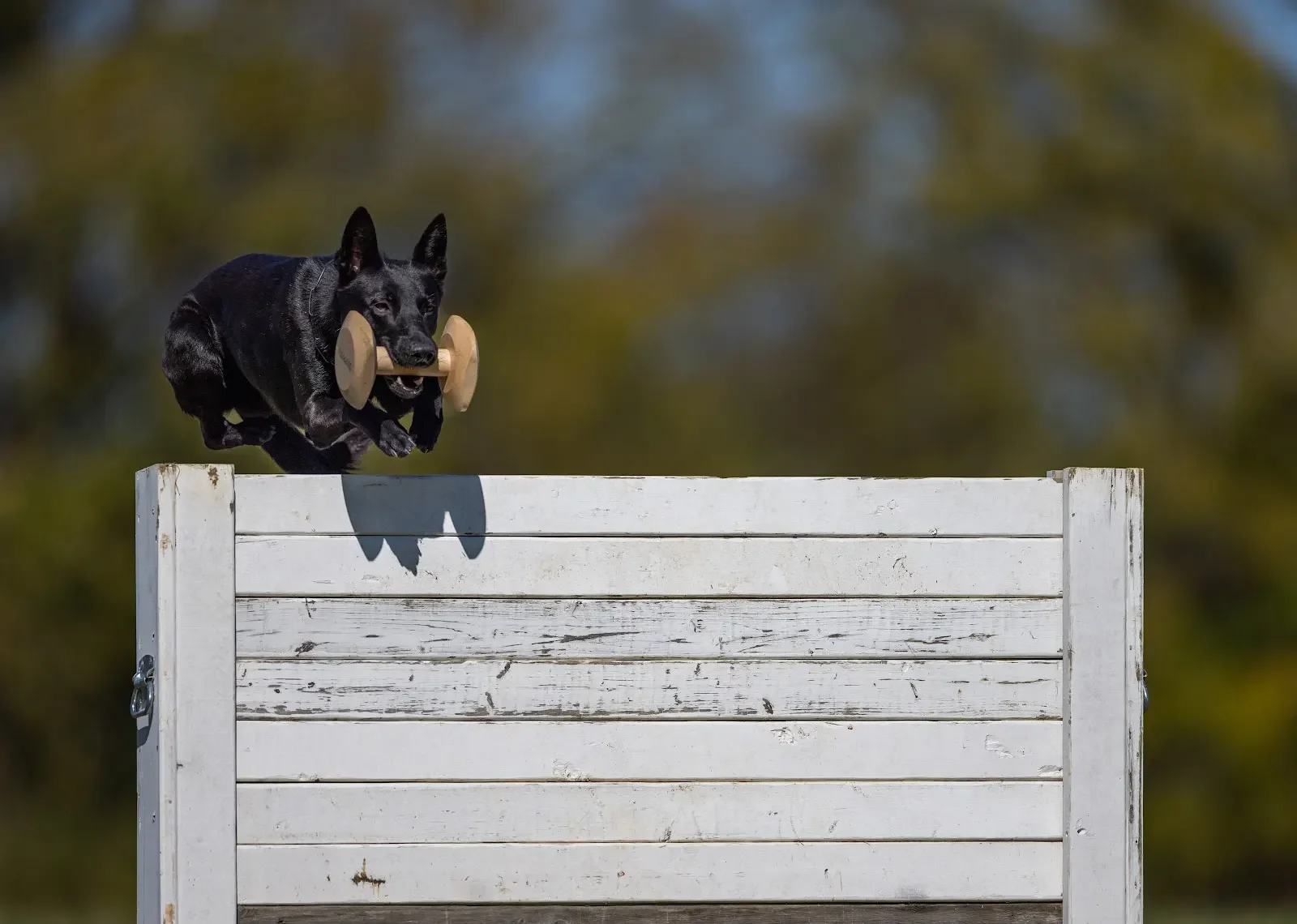
American Schutzhund (AS) is a modern working dog sport developed in the United States that evaluates a dog's versatility, trainability, and working ability through three phases: Scent Detection, Obedience, and Protection.
While it shares many foundational principles with IGP, American Schutzhund replaces traditional tracking with operational scent detection, reflecting the growing importance of detection work in modern police, military, and professional canine applications.
Picture used with permission
The scent detection phase emphasizes odor recognition, independent searching, persistence, and problem-solving. The obedience phase tests precision, control, and handler engagement, while protection evaluates courage, confidence, gripping behavior, and control.
Dutch Shepherds have become increasingly successful in scent detection disciplines because of their curiosity, persistence, and exceptional work ethic. Combined with their animated obedience and confident protection work, many transition comfortably between detection and protection without sacrificing intensity.
What is the Protection Sports Association (PSA)?
The Protection Sports Association (PSA) is an American working dog sport designed to evaluate obedience, control, courage, and adaptability under realistic and constantly changing conditions.
Unlike many traditional protection sports, PSA emphasizes a dog's ability to perform reliably in the face of uncertainty rather than simply following memorized routines.
The sport consists of two primary phases: Obedience and Protection. The obedience phase evaluates precision, control, and engagement, while the protection phase challenges courage, gripping ability, and decision-making under pressure.
At higher levels, judges have considerable freedom to design unique scenarios involving obstacles, distractions, environmental challenges, and unpredictable sequences. Teams must solve problems in real time while maintaining accuracy and teamwork.
This constantly changing environment rewards dogs capable of adapting without becoming overwhelmed. Dutch Shepherds often excel in PSA because of their resilience, environmental confidence, and ability to recover quickly from unexpected challenges.
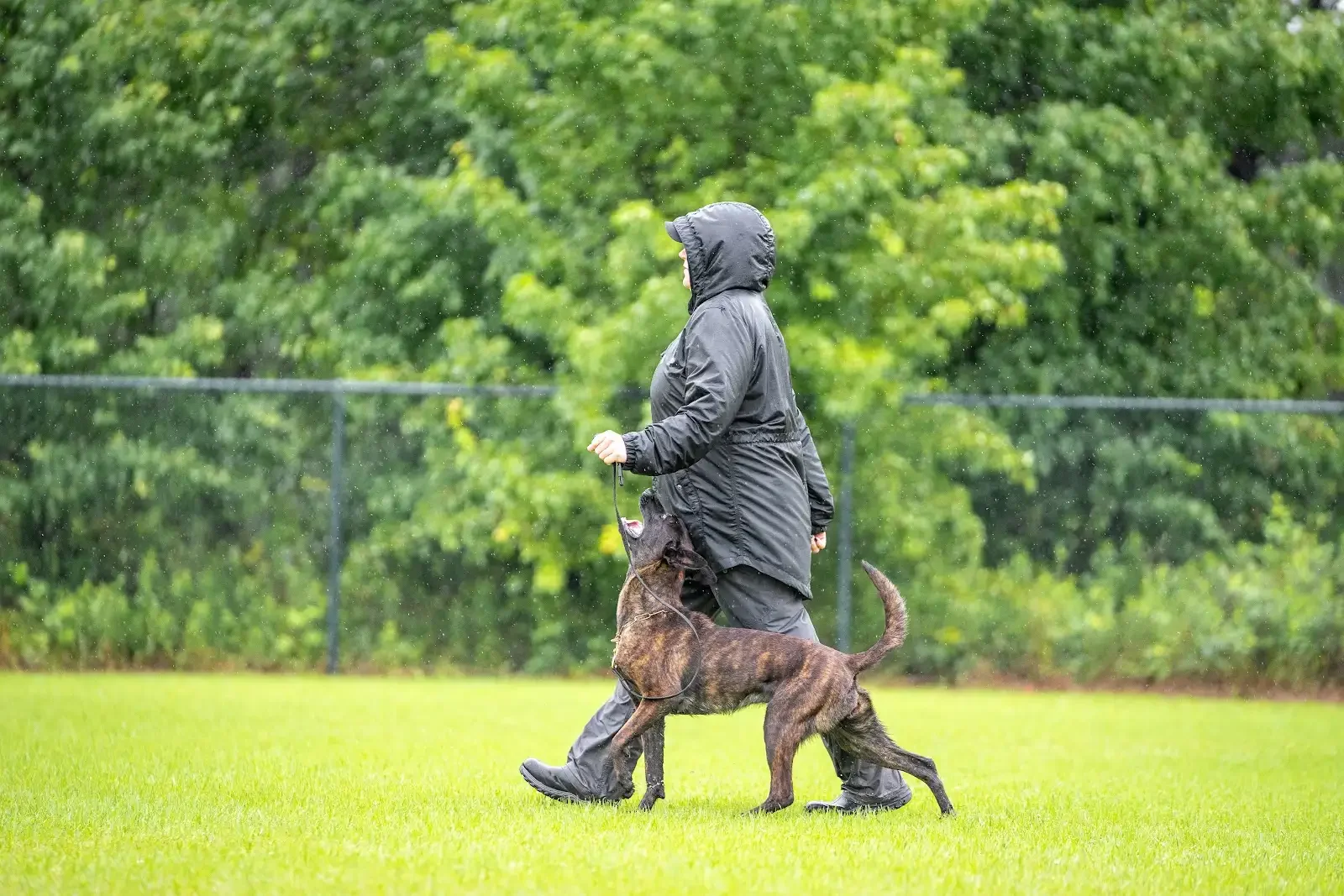
Picture used with permission
What are Ring Sports?
Ring Sports are a family of European working dog sports that evaluate obedience, athleticism, courage, control, and environmental stability through demanding protection exercises.
The three major Ring disciplines—French Ring, Mondioring, and Belgian Ring—share common roots but differ in rules, presentation, and emphasis.
Unlike IGP or PSA, obedience and protection are not separated into distinct phases. Instead, the entire routine flows continuously from one exercise to the next, requiring dogs to maintain focus, intensity, and precision throughout an extended performance.
French Ring is known for its exceptionally athletic decoys, whose objective is to evade the dog and make the bite technically challenging. Decoys actively test timing, commitment, athletic ability, and confidence.
Mondioring adds complexity by building competitions around unique themes. Trial fields may include unusual obstacles, distractions, costumes, elevated platforms, and environmental challenges designed to test adaptability and nerve.
Belgian Ring emphasizes endurance, jumping ability, and practical working skills while maintaining many traditional elements that influenced modern Ring sports.
Unlike sleeve sports, Ring dogs bite a fully suited decoy and may target legal areas of the suit. Success depends less on obtaining a perfect grip and more on commitment, confidence, and the ability to maintain control despite constant movement and pressure.
Few breeds are naturally better suited to these demands than the Dutch Shepherd. Their athleticism allows them to match highly skilled decoys, while their environmental confidence enables them to ignore distractions without losing focus.
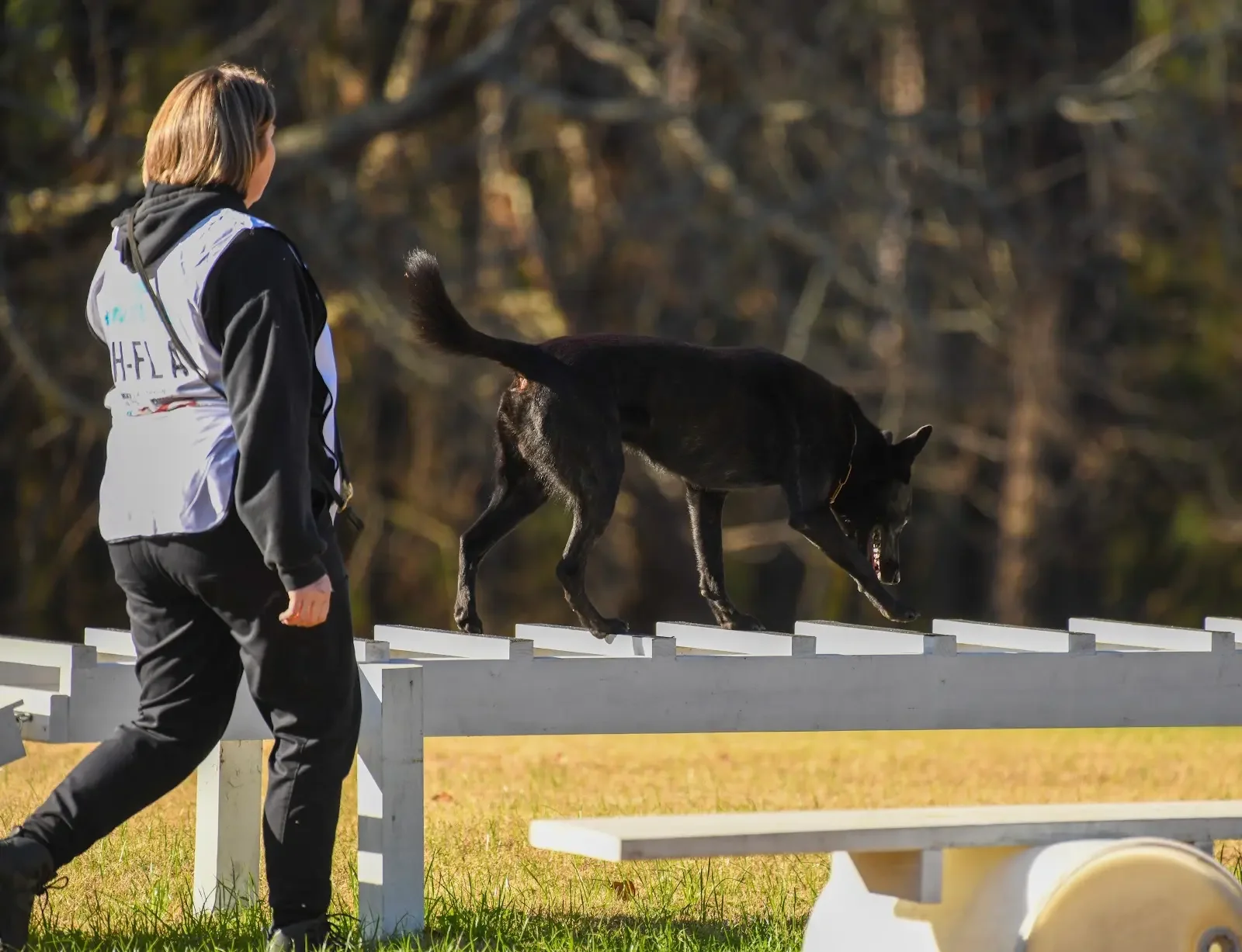
owner Ashley Picture (used with permission)
The Common Thread
Although each sport evaluates working ability differently, the most successful dogs tend to share the same underlying characteristics.
They must think clearly under pressure, recover quickly from unexpected challenges, transition smoothly between different tasks, remain physically capable throughout demanding routines, and maintain their partnership with the handler despite distractions and stress.
These demands help explain why Dutch Shepherds have become increasingly prominent across so many working disciplines.
The breed possesses a rare combination of athleticism, environmental confidence, resilience, trainability, and endurance that allows it to meet the varied challenges of modern competition without sacrificing intensity or precision.
Conclusion
The Dutch Shepherd's success in modern working sports is not simply the result of drive or intensity. Rather, it reflects a combination of qualities that have become increasingly valuable as training methods, judging standards, and competition continue to evolve.
As today's working sports reward speed, precision, adaptability, and composure under pressure, the characteristics that have long defined the Dutch Shepherd remain exceptionally well suited to the task.
Their growing presence across IGP, American Schutzhund, PSA, and Ring Sports is not a passing trend—it is the natural result of a breed uniquely equipped for the evolving demands of modern working competition.