Frisbee Dog: The Fast-Flying Sport Built for Athletic Dogs
There’s something unforgettable about watching a dog launch into the air, twist mid-flight, and snatch a flying disc with perfect timing. What began as backyard fun has grown into one of the most exciting canine sports in the world: Frisbee Dog, also known as Disc Dog.
For energetic, intelligent breeds like the Dutch Shepherd, disc sports offer the perfect combination of speed, focus, athleticism, and teamwork. Whether you’re training for competition or simply looking for a fun way to bond with your dog, Frisbee Dog is a sport that rewards creativity, precision, and trust.
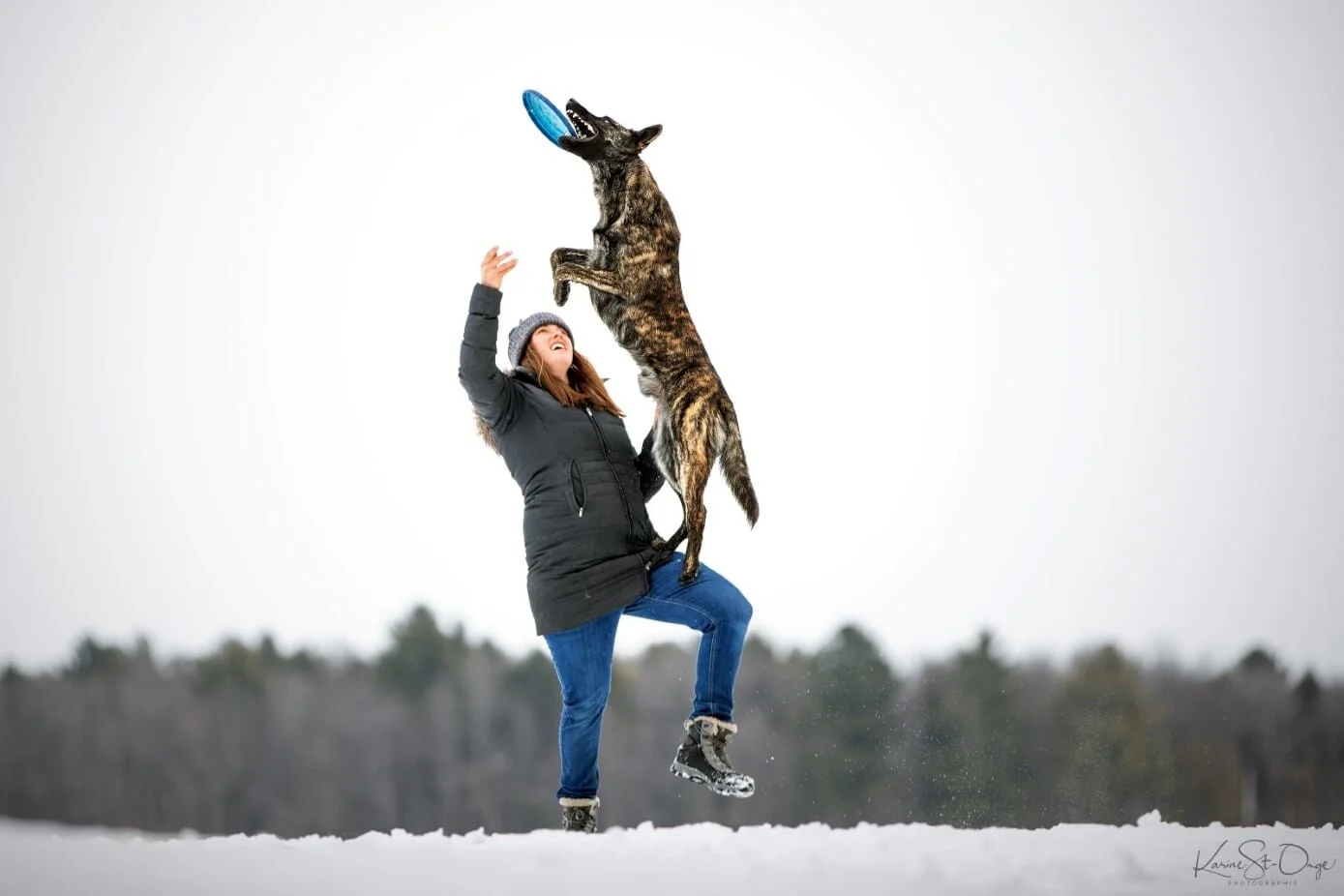
Oliver Twist with Amelie / Ecole D’agility Canada - Teamgsquebec-
What Is Frisbee Dog?
Frisbee Dog is a canine sport where dogs catch flying discs thrown by their handlers. Competitive routines combine:
Distance catching
Accuracy
Speed
Athletic jumps
Choreographed freestyle performances
Some events focus on long throws and fast retrieves, while freestyle competitions add music, tricks, and synchronized movement between handler and dog.
The sport is popular because it blends:
Physical exercise
Mental stimulation
Obedience
Performance artistry
It’s essentially part athletics, part dance, and part teamwork.
Why Dutch Shepherds Excel at Disc Sports
The Dutch Shepherd is naturally suited for Frisbee Dog because of several key traits:
High Athletic Ability
Dutch Shepherds are agile, explosive, and fast. Their powerful hind legs and balance make them excellent jumpers and aerial catchers.
Strong Toy Drive
Many Dutchies are highly motivated by toys and games, making disc training naturally rewarding.
Intelligence & Trainability
Disc routines require timing, control, and advanced obedience. Dutch Shepherds learn patterns quickly and thrive when challenged mentally.
Endurance
These dogs can maintain intensity and focus during long practice sessions and competitions.
Types of Frisbee Dog Competitions
Distance & Accuracy
In these events, handlers throw discs across a field while dogs score points by catching them in designated zones.
The farther and cleaner the catch, the higher the score.
Freestyle Disc
Freestyle combines:
Music
Tricks
Vaults
Spins
Multiple discs
Choreographed movement
This is where creativity becomes just as important as athleticism.
Top freestyle teams often look more like dance partners than traditional dog handlers.
Time Trial Events
Some competitions reward speed and efficiency — how quickly a dog can complete catches and returns.
Skills Dogs Learn in Disc Training
Disc sports develop far more than catching ability. Dogs improve:
Focus under distraction
Handler engagement
Impulse control
Body awareness
Coordination
Recall reliability
Confidence
Many trainers use Frisbee Dog as a foundation for advanced obedience and relationship building.
Getting Started in Frisbee Dog
You don’t need competition goals to begin.
Start with the Right Disc
Use soft canine-safe flying discs designed specifically for dogs. Hard plastic discs can damage teeth.
Teach the Basics First
Begin with:
Tug games
Rollers (rolling the disc on the ground)
Short tosses
Rewarding catches
Rolling discs helps dogs learn tracking before introducing aerial catches.
Build Jumping Gradually
Young dogs should avoid repetitive high-impact jumping until physically mature.
Focus on:
Safe takeoff
Controlled landings
Proper conditioning
Keep Sessions Short & Fun
Disc training works best when dogs stay excited and successful.
5–10 minute sessions are often ideal.
The Role of Creativity in Freestyle Disc
Freestyle Frisbee Dog stands apart because no two routines are the same.
Handlers combine:
Tricks
Footwork
Timing
Music
Directional throws
Athletic catches
The best teams develop a unique style and rhythm together.
This creative side is why disc sports are often grouped with:
Canine Freestyle (Dog Dance)
Trick Dog performance
Performance sports
Safety Matters
Because Frisbee Dog is highly athletic, conditioning and technique are important.