Conformation and the Dutch Shepherd: Evaluating Excellence in the Ring
Show Competition
When stepping into the conformation ring, every detail matters—from the set of a dog’s ears to the fluidity of its movement. For enthusiasts of the Dutch Shepherd, conformation is not simply about appearance; it is a celebration of function, heritage, and breed integrity. Understanding how this remarkable working dog is evaluated in the show ring provides deeper appreciation for both the breed and the sport itself.
What Is Conformation?
Conformation is the evaluation of how closely a dog matches its breed standard—the official blueprint for structure, movement, coat, and temperament. For the Dutch Shepherd, this goes far beyond looks. The breed was developed as a versatile farm and working dog capable of herding livestock, guarding property, and performing physically demanding tasks.
Because of this history, judges are not simply looking for a beautiful dog. They are evaluating whether the dog appears capable of doing the job it was originally bred to perform.
A correct Dutch Shepherd should be:
Well-balanced and athletic
Slightly longer than tall
Built for endurance and agility
Equipped with efficient, ground-covering movement
Alert, intelligent, and attentive in expression
One of the breed’s defining features is its brindle coat, which reflects the traditional appearance preserved through generations of selective breeding.
Movement Matters
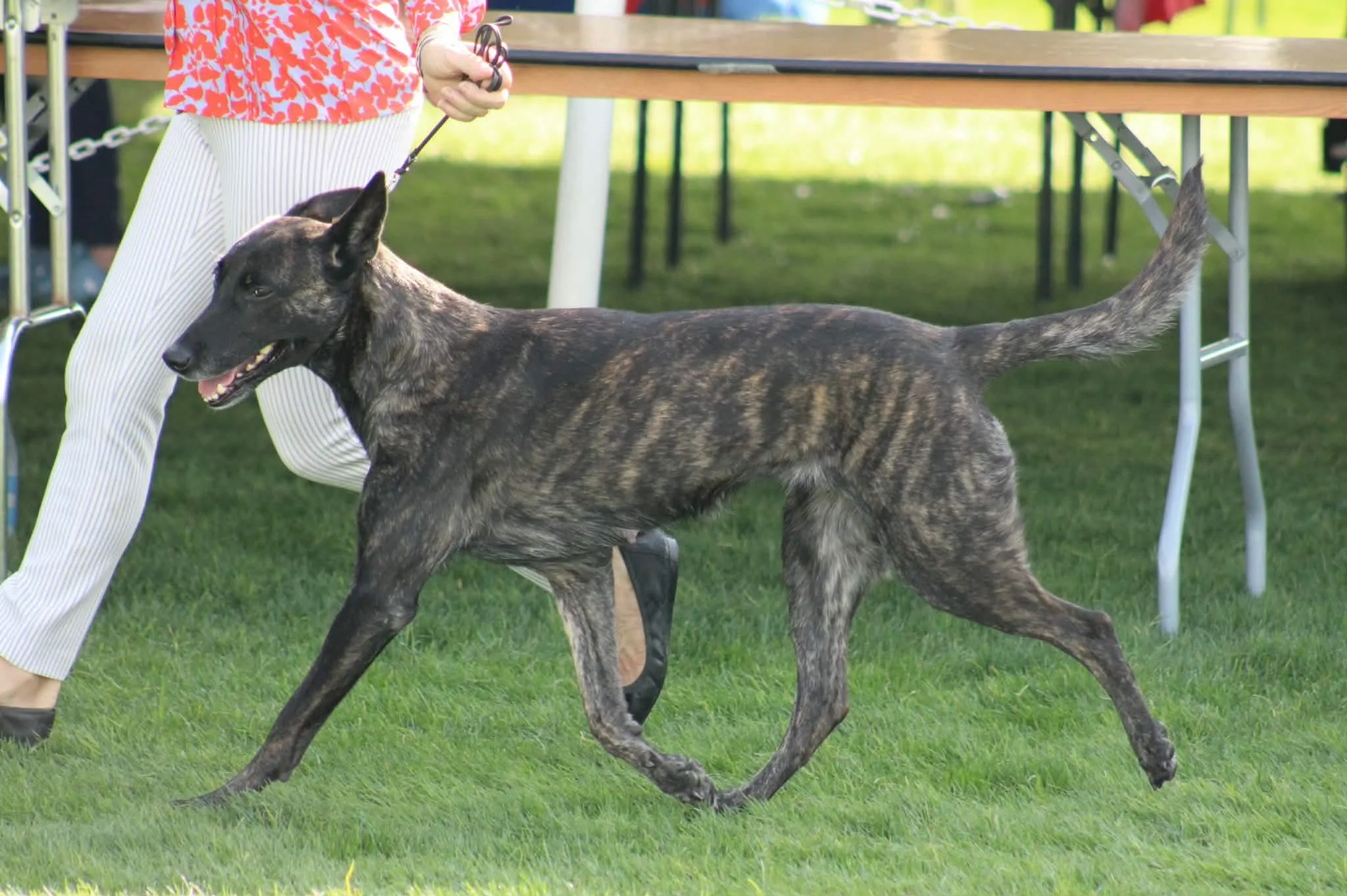
Ivy Wildflower DSK CM5 /handler and breeder Sylviane Chapoulaud (permitted)
In the conformation ring, movement is one of the most important aspects of evaluation. A Dutch Shepherd should move smoothly and efficiently without wasted motion. Strong reach and drive, balanced gait, and sound structure all indicate a dog built for stamina and real working ability.
A flashy dog may catch attention standing still, but judges ultimately want to see a dog capable of maintaining athletic performance throughout a full day of work.
Temperament in the Ring
Temperament is equally important. The Dutch Shepherd should display confidence, composure, and attentiveness. The breed should never appear fearful, unstable, or unnecessarily aggressive.
Because Dutch Shepherds are naturally intelligent and highly aware of their environment, successful show dogs often demonstrate calm self-control while remaining engaged with their handler.
AKC vs. UKC vs. FCI vs. IABCA: Understanding the Differences
Understanding how the Dutch Shepherd is treated across major kennel organizations is essential because recognition and evaluation vary significantly between registries.
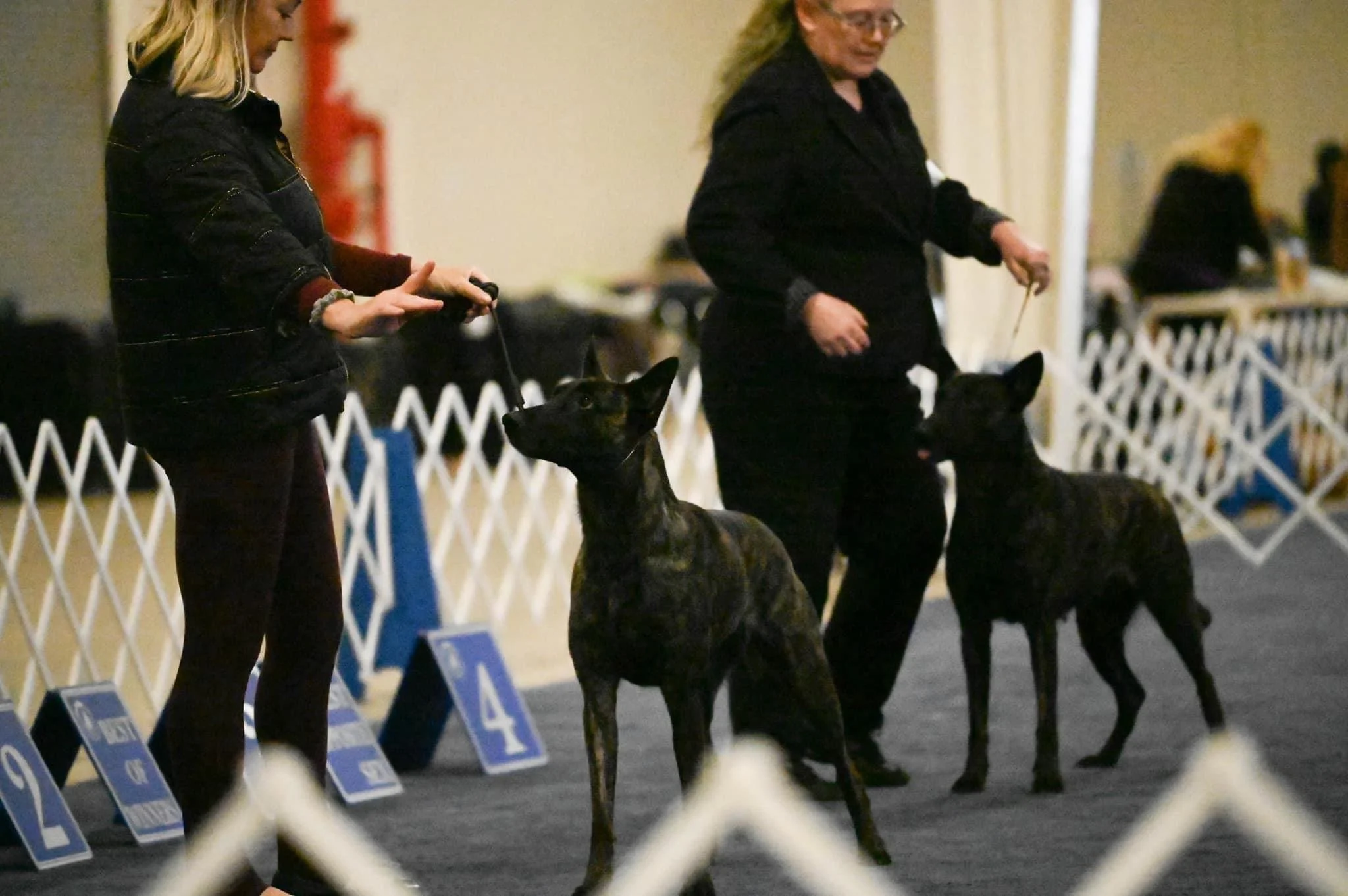
Ivy Wildflower DSK -CM5 and Nemesis goddess of Revenge TDF- CM1 (permitted)
American Kennel Club (AKC)
The American Kennel Club currently does not fully recognize the Dutch Shepherd as a standard conformation breed. Instead, the breed remains within the Foundation Stock Service (FSS).
What this means:
Dutch Shepherds cannot compete in regular AKC conformation shows
They can participate in performance sports such as obedience, agility, rally, and tracking
Full AKC conformation competition is still pending breed recognition
As of April 2026, the American Dutch Shepherd Association has applied for full AKC recognition, representing an important milestone for the breed in the United States.
For exhibitors focused specifically on conformation, AKC is currently a future opportunity rather than a primary venue.
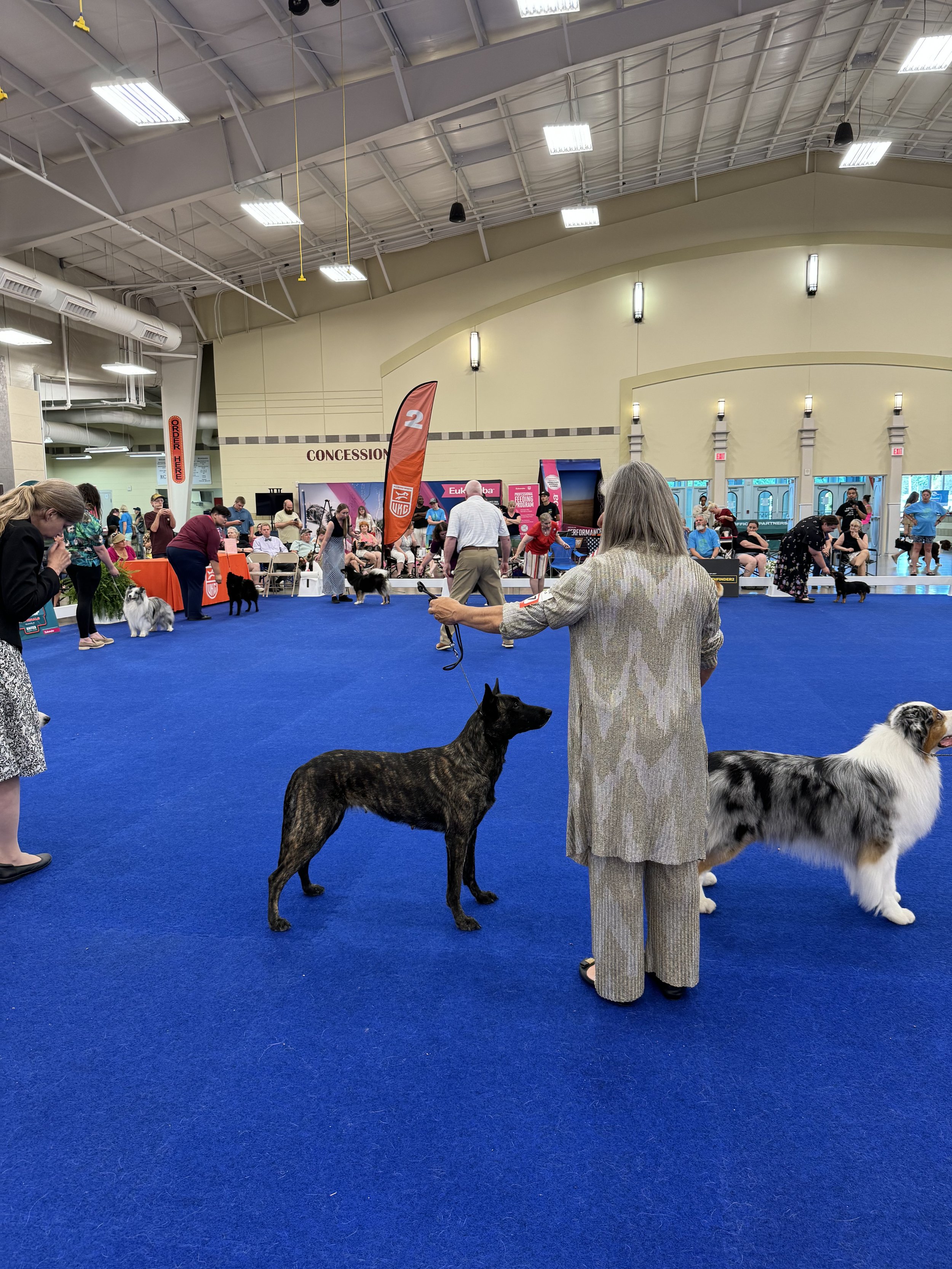
UKC GRCH Ivy Wildflower DSK, CM5 RI RN TKP TKE, DASH RACEN UWP— Handler/Breeder: Sylviane Chapoulaud (permitted)
United Kennel Club (UKC)
The United Kennel Club fully recognizes the Dutch Shepherd and offers established conformation competition.
UKC judging emphasizes:
Functional structure
Athletic balance
Working ability
Moderate, practical build over exaggerated features
UKC is especially popular among owners and breeders who value the “Total Dog” philosophy—meaning a dog should excel in both structure and working performance.
For many Dutch Shepherd enthusiasts, UKC provides the ideal balance between sport, utility, and breed preservation.
Fédération Cynologique Internationale (FCI)
The Fédération Cynologique Internationale serves as the international authority for the Dutch Shepherd and follows the original European breed standard.
In FCI conformation:
Breed type is strictly evaluated
Correct brindle coloration is essential
Historical accuracy and structure are heavily emphasized
Judging reflects the breed’s origins in the Netherlands
For breeders focused on preserving traditional Dutch Shepherd characteristics, the FCI standard is often considered the global benchmark.
International All Breed Canine Association (IABCA)
The International All Breed Canine Association offers an international-style conformation experience that differs from traditional competitive formats.
Unlike many kennel clubs where dogs compete directly against one another for placements, IABCA places strong emphasis on individual evaluation. Dogs are judged against the breed standard itself and receive written critiques describing their strengths and weaknesses.
IABCA shows are known for:
Educational judging and detailed evaluations
A welcoming atmosphere for newer exhibitors
International-style scoring and ratings
Opportunities for rare and developing breeds
Lower-pressure environments compared to highly competitive circuits
For Dutch Shepherd owners, IABCA can be an excellent introduction to the conformation world. Exhibitors often appreciate the opportunity to gain ring experience while receiving valuable feedback on movement, structure, coat, and temperament.
IABCA also appeals to breeders seeking objective evaluations that can help guide future breeding decisions.
Why These Differences Matter
For breeders, handlers, and enthusiasts, registry differences influence breeding priorities, competition opportunities, and long-term breed preservation.
UKC highlights practical functionality and versatile structure
FCI preserves historical breed type and international consistency
IABCA focuses on education and individual breed evaluation
AKC represents a developing pathway toward broader recognition in the United States
Each organization contributes differently to the future of the breed, but all serious conformation evaluation shares one common goal: protecting the integrity of the Dutch Shepherd.
Preserving a Working Legacy
At its core, conformation is not simply about ribbons or titles. It is about ensuring that future generations of Dutch Shepherds remain sound, capable, and true to their working heritage.
A great Dutch Shepherd should not only look correct in the ring—it should still appear ready to work the farm, guard the flock, or perform alongside its handler with confidence and endurance.
That balance of beauty, athleticism, intelligence, and purpose is what makes the Dutch Shepherd one of the most respected working breeds in the world.
Here are the official organizations & links
American Kennel Club (AKC)
The primary kennel club in the United States. The Dutch Shepherd is currently listed in the Foundation Stock Service (FSS).United Kennel Club (UKC)
Fully recognizes the Dutch Shepherd and offers conformation competition focused on functional working structure.Fédération Cynologique Internationale (FCI)
The international governing body that maintains the original European breed standard for the Dutch Shepherd.International All Breed Canine Association (IABCA)
Hosts international-style dog shows with written critiques and educational conformation evaluations.